In this Chapter Wood outlines and describes how language reflects and reinforces our views on gender.
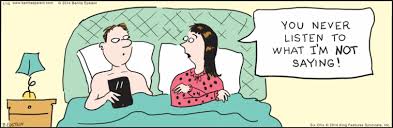
The first connection that Wood makes between language and gender is that "Male generic language excludes women." This idea is true and can be seen in most of our daily conversations today. We tend to refer to jobs and positions with terms that are only male inclusive. For example, terms such as fireman, congressman, spokesman, mankind, mailman and a plethora of other terms have the word "man" in them. By association, one can infer that these terms signify jobs that only men can have. But this is definitely not the case. It is very important for us to all gravitate towards using more gender neutral statements that is inclusive to everyone such as spokesperson, police officer, humankind etc. 
The second connection that Wood makes is that "Language defines men and women differently." Men are typically defined by activities they participate in, accomplishments they receive, and the positions they hold. on the other hand, women are typically defined by their relationships with others and their physical appearance. When in athletic competitions, I found it egregious to find out that commentators mostly comment on the appearance of the woman and her outfit. It is appalling to know that that occurs and we dont do anything about it. Commentators should strictly only comment about the skills and the progress of the match rather than her appearance. During men's competitions or matches, they only comment on the play of the athletes so why deviate when it comes to women?
The third connection that Wood makes is that "Language shapes awareness of gendered issues." This section describes how things have meaning once we name them. If we don't acknowledge something and name it then its existence is questioned. The example of sexual harassment was brought up. through this we could see that until not long ago sexual harassment didn't really exist. Even though it actually occurred it was hard to describe and point out because there wasn't a name given to it. Once it was given a name it is now something that we are all aware of now.
The fourth connection that Wood makes is that "Language organizes perceptions of gender." Two ways in which this occurs is through stereotyping and through polarized thinking. We have stereotypes of men and of women that causes our perception of gender to be skewed. We stereotype all women to be emotional and weak while we stereotype all men to be overly masculine and emotionless. When we meet someone that does not live up to the stereotype that we perceive we then describe them using terms with negative connotations. This polarized thinking is a way of thinking that causes us to think that everything is polar opposites Like right and wrong, heterosexual, bisexual and homosexual, to name a few. These statements are untrue and are not sensitive to our understanding of gender because there are people who don't identify with these and they might list themselves somewhere in the middle, but is it our right to judge and be insensitive?
The fifth connection is that "Language evaluates gender." We as a society, tend to give women nicknames and call women by names that is trivializing and juvenile. Associating women with such things like cupcake, baby doll etc. make women out to be items and animals rather than the humans that they are. Language we use to define men and women are drastically different and they have many different inherent meanings. For example, the use of language towards men who frequently have sex and women who frequently have sex are completely polar. Men who have sex very often are referred to as "studs" and "man whores" whilst women are referred to as "sluts."
The last connection that Wood makes is that "Language allows self reflection . This is something that changes over tine and we are forced to live up to standards of the ideals of celebrities that we see on a daily basis. This in turn causes both men and women to alter their bodies from a younger age to attain these ideals.
The second section of the chapter explains how both men and women are socialized into different groups and how these different groups go about and view communication. Women tend to be more passive when speaking and have conversations that are more responsive and supportive. Men are more assertive and commanding when speaking and therefore tend to interrupt more often and speak more. Also men are socialized to be competitive and have a need to assert dominance in conversation.
Through these we can see how language has shaped how we act on a day- to-day basis and how powerful of a tool is in our lives. We should be more conscious with our words and be mindful of what we are implying when we make certain statements.
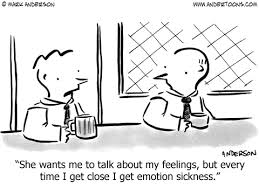
I found this chapter pretty interesting. Prior to this, I've begun to notice how my language can be misinterpreted because I had made a generalization or I have used a gender exclusive term. It is hard to break habits like that because most of us have learned these things from a very young age, whether it is on a school bus, at home. through TV or in the classroom. We are always around stereotypes and gender exclusive language. But the change starts one person at a time. The more we educate people about their mistakes the more there will be a shift towards equality through language.
Why hasnt there been a shift sooner towards more gender inclusive language? It seems to be such a simple issue but yet children are being raised around it and are not being told about it until they are older?
What are some strides that have been made towards making an effort to curb gender exclusive language in classrooms?

No comments:
Post a Comment